
Grain
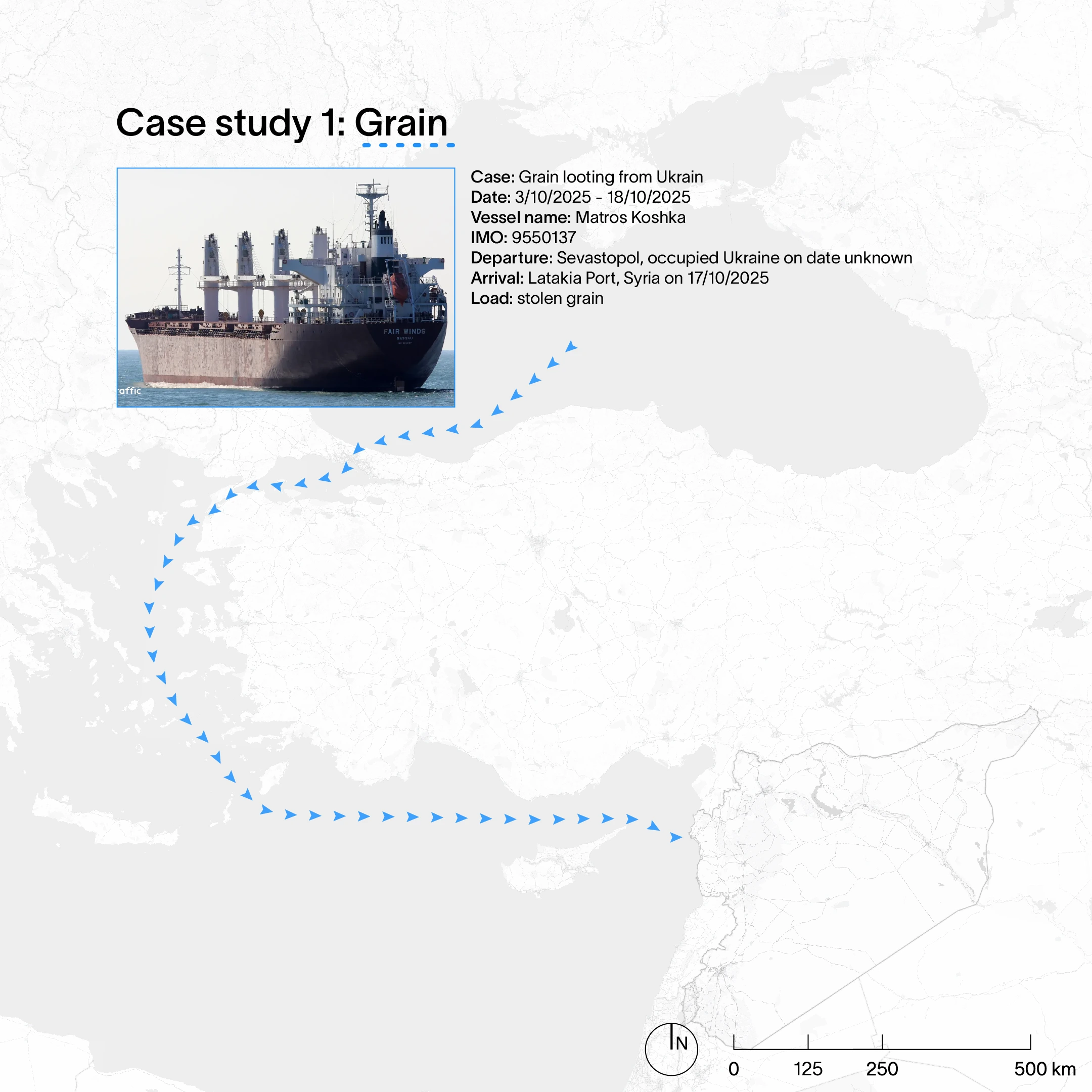
Building on in-depth reports of the looting of grain from Russian-occupied areas of Ukraine and the shipping of this grain to Latakia, we investigated—concerned by the lack of change in ownership of the port after the fall of Assad—whether this looting has continued under the new regime.
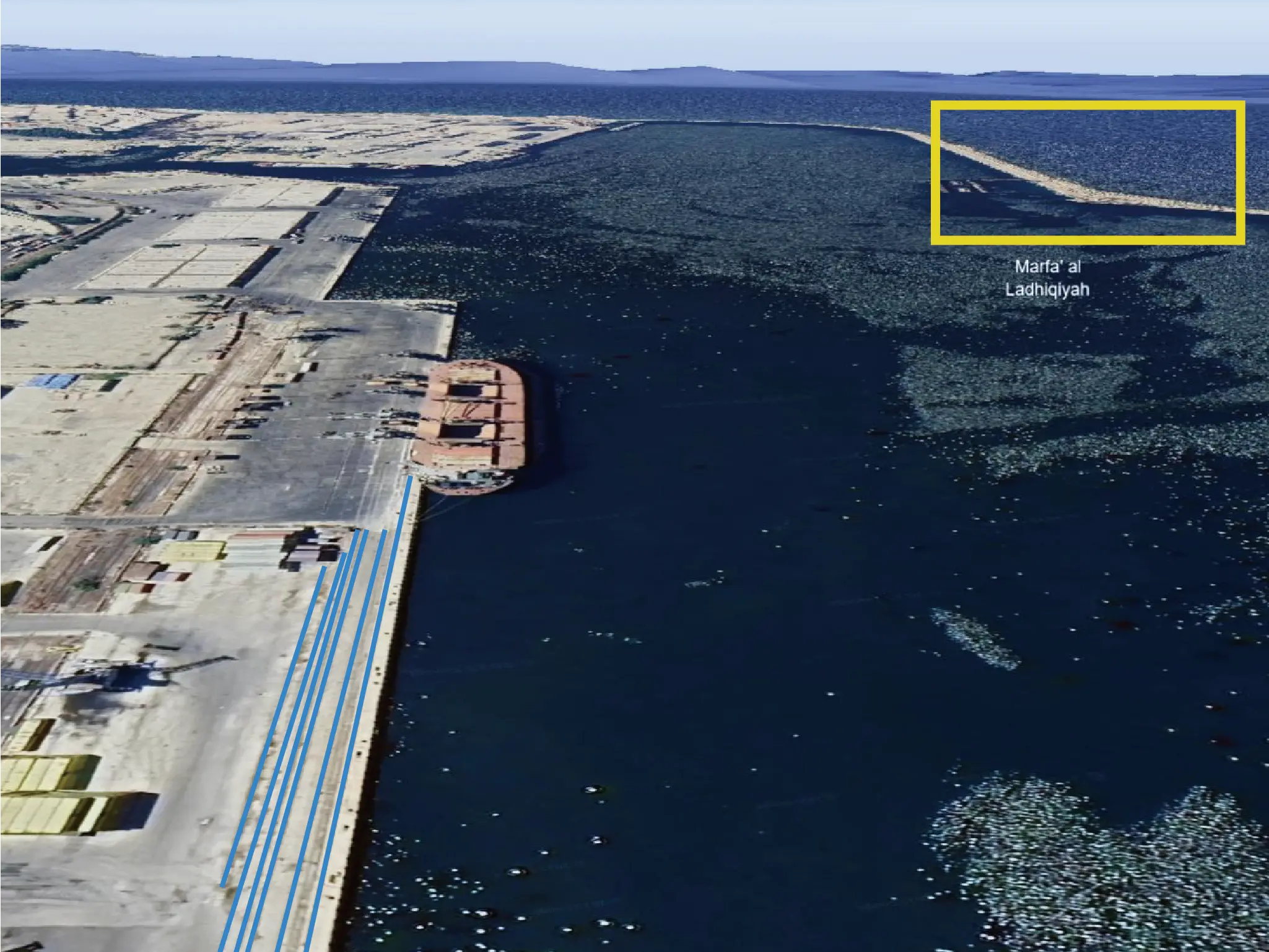
We investigated one Russian ship transporting grain to Latakia; Matros Koshka. Using a mixture of satellite imagery, AIS data, and OSINT images and videos, (alongside previous reporting of these ships’ involvement in grain looting) we confirmed the delivery and offloading of looted grain in Latakia by the Matros Koshka between the 13th and 18th of October, 2025.. We then researched the companies behind these shops revealing they were both sanctioned ships with a history of involvement in grain looting.
The Matros Koshka is the most suspicious out of the two as its port of origin was Sevastopol, a common departure port for looted grain shipments where grain is transported onto cargo ships in occupied Ukraine and then a smaller amount added in Sevastopol, creating the guise of a legal shipment. Also, the cargo ship turned its AIS off near the coast of Syria, when its destination was supposed to be Beirut, leading to speculation online to mask its real destination of Latakia – which we were able to confirm.
Syria’s Grain Economy
War, an economic crisis, and historic drought issues2 have left a dearth of demand for grain in war torn Syria, as the countries cultivation levels remain significantly lower from before 2011. Although Syria’s breadbasket reputation in the region, as of now the estimated production is just 19 % of domestic demand. As a result, Syria, once a wheat exporter, is now highly import-dependent, undermining its food sovereignty and exposing its population to bread-shortages, price-spikes and humanitarian vulnerability.
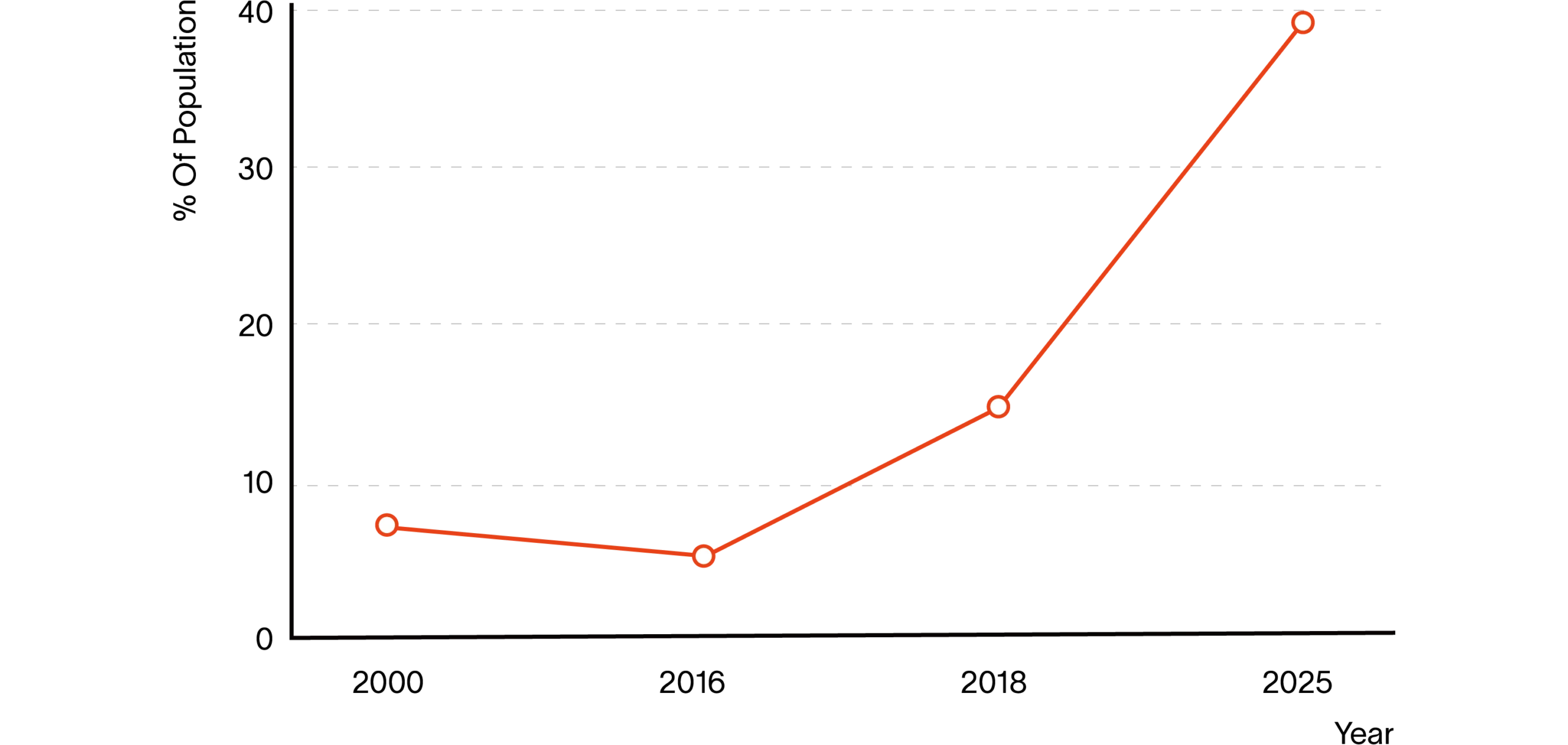
When domestic production collapses, states are forced to import grain or flour to fill the gap. But importing carries structural risks. It creates economic dependency: the state and population become reliant on foreign supply chains, vulnerable to global price fluctuations, foreign currency shortages, trade disruptions and geopolitics. It weakens the domestic agricultural base: when imports are cheaper or more reliable than local production, local farmers may abandon wheat, further degrading local capacity. In the Syrian case, the shortfall in wheat leads to rising bread costs and diminishing purchasing power for citizens.
Grain Looting During Assad Regime
War, an economic crisis, and historic drought issues have left a dearth of demand for grain in war torn Syria, as the countries cultivation levels remain significantly lower from before 2011. As a result, the Assad regime began turning to foreign companies to supply the country.
Reporting by OCCRP4 and several other outlets5 reveal Assad’s involvement in Russia’s looting of Ukrainian grain. Since Russia took over the Crimean peninsula Russia owned cargo ships have repeatedly taken thousands of tons of grain from native Ukrainian’s and shipped them off to countries willing to purchase the illicit grain. One of these countries, research shows, has been Syria – with its two major ports (Latakia and Tartous) receiving an unloading these shipments.
A recent report by OCCRP reveal the intricacies of this network with a shipping company managed by Tahir Al-Kayali, reported to be an affiliate of Maher Al-Assad, a key individual in the shipping of this looted grain.
Post-Assad Regime
Case study: Matros Koshka and Crane Marine Contractors
Our own research, due to the established and already reported on patten of grain looting under Assad, led us to focus on whether this pattern is still present post the fall of Assad.
A Reuters report6 detailed that it is paramount for the new Syrian government to import grain due to the worst drought in 38 years that slashed the already low cultivation levels by 40% to just 1.2 million tons last year – the country consumes around 4 millions tons every year.
We tracked and mapped out the journeys of two ships which posts on social media alleged was transporting stole grain from Russian-occupied Ukraine to Latakia.
One ship in particular took our interest, the Matros Koshka8, due to its previous involvement with grain looting from Ukraine – the ship even reportedly delivered9 30,000 tons of stole grain to Latakia in May 2022. A social media post from October 2025 claimed the cargo ship was taking a similar route – delivering 27,000 tons of stolen grain to Latakia after turning off its AIS data, a common tactic used by organisers of this looting to hide their tracks. The grain was alleged to be loaded in occupied Sevastopol from the 3-7th of October.
We began tracking the ships journey, verifying videos posted to social media of the ship travelling through the Bosporus Strait – a common route for ships travelling from Russian-occupied Ukraine. We then gathered satellite image and videos posted online that confirmed the ship was in Latakia in October 2025 unloading grain. We struggled to find clear imagery of the port of Sevastopol where the initial post alleged the Matros Koshka had picked up the grain – yet one image we found from the 7th of October 2025 in the port of Sevastopol matches the dimensions of the Matros Koshka.
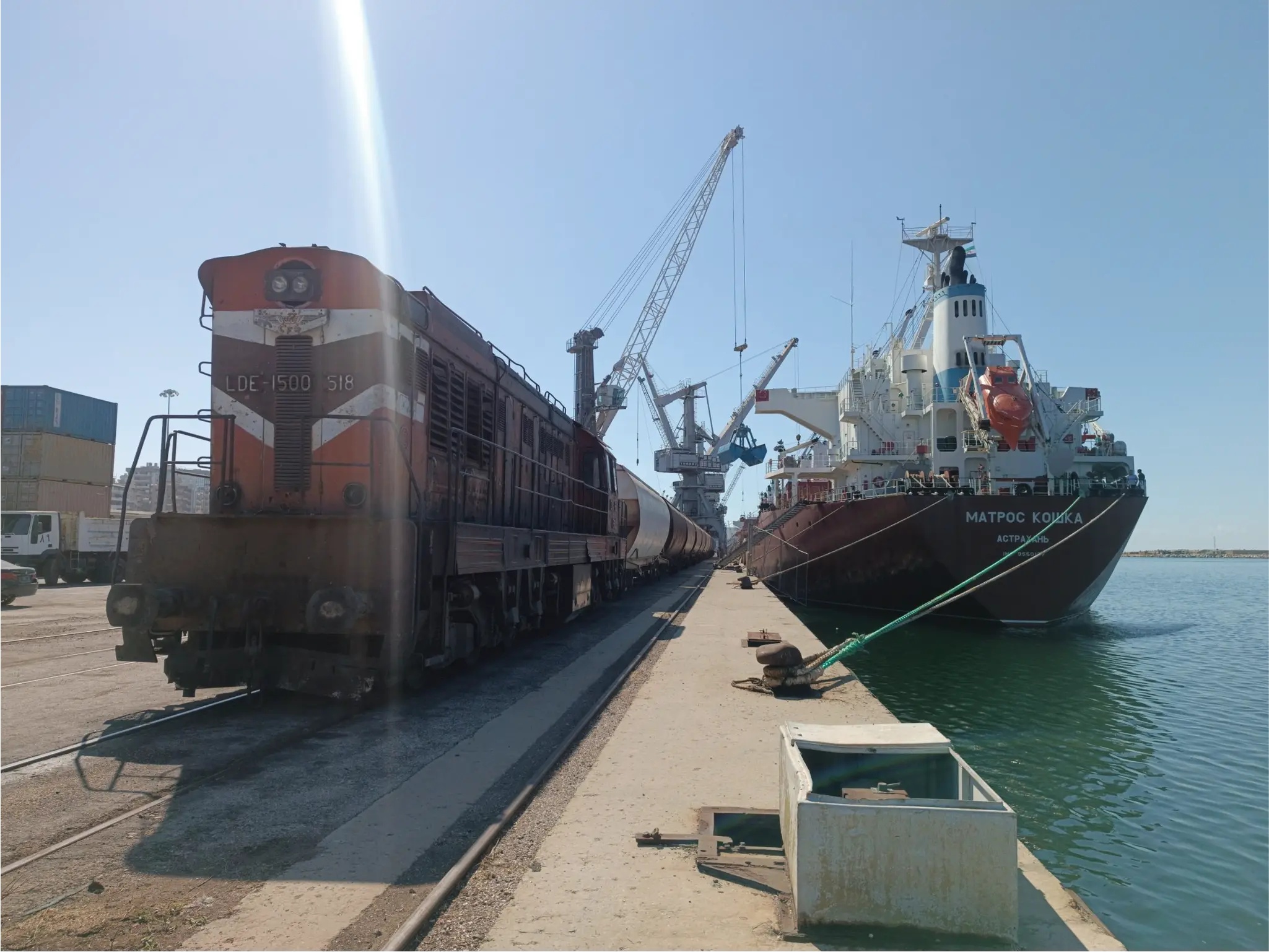
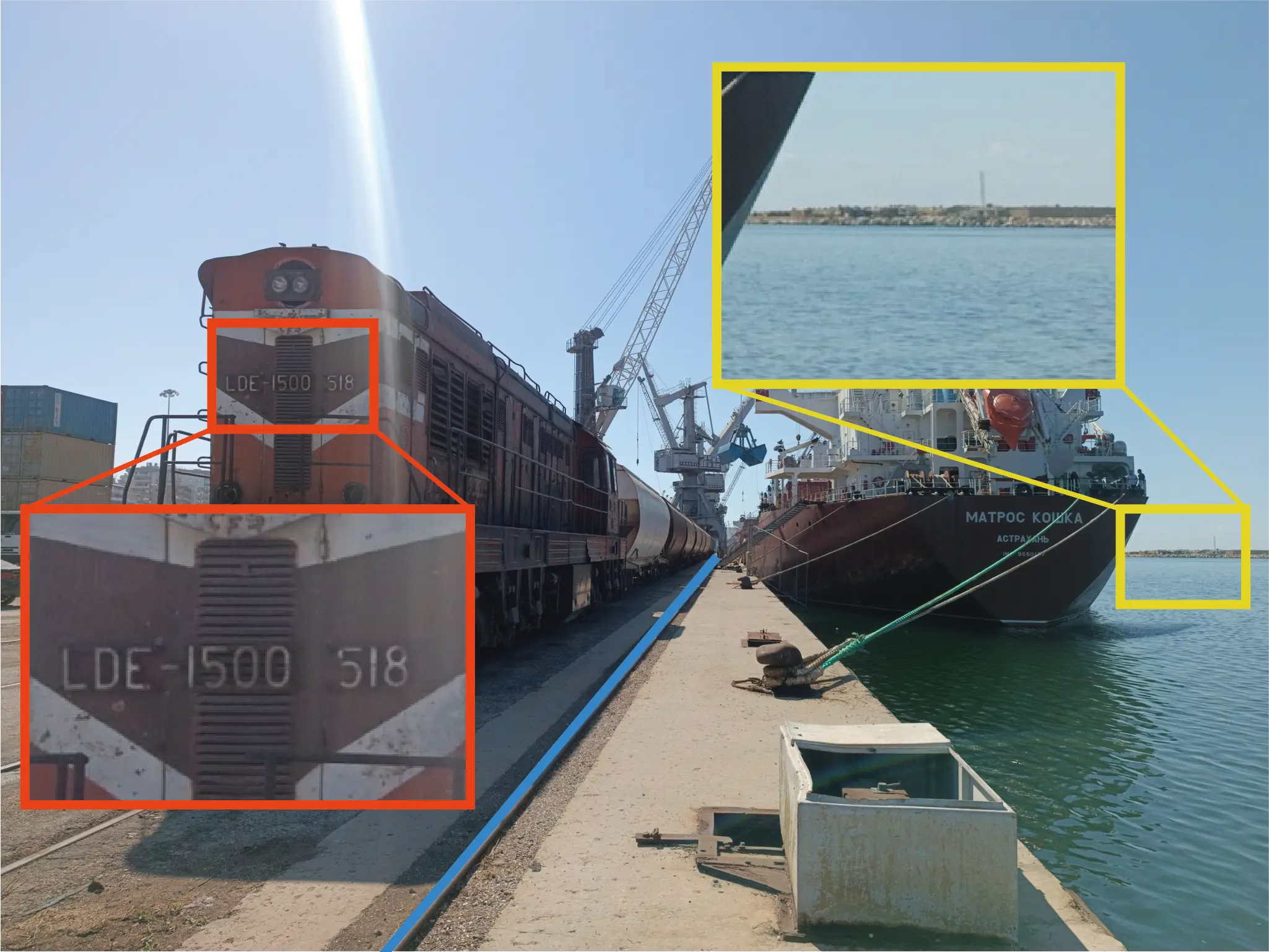
Facebook photo shows the Matros Koshka docked at Latakia port in October 2025, confirmed by Sentinel satellite imagery
Conclusion
These case studies focused on a small sample of boats present in Latakia port in the week starting on the 13th October 2025. Yet this small sample has demonstrated the multinational, nature of illegal grain shipping, which cuts across predictable motivations, such as the consistent Russian interest in undermining Ukrainian food supply chains for military and corporate strategic advantage, and instead opening a clandestine market for seemingly non-affiliated businesses abroad to collaborate with and profit from these interests.
It also demonstrates the potentials for unwitting complicity to spread due to the porosity of the port, as the same companies profiting from illegal grain freight have the potential to transport other goods like ship parts, which are vital for all companies and ships making use of the port. Without open access to bills of lading to know who is buying parts from complicit companies, it is possible that any number of ships moving through the port could be unknowing collaborators in the illicit grain trade. We cannot determine whether they aree the same companies and actors as during the Assad regime. Nevertheless, the process by which looted Ukrainian grain ends up in Syrian markets has not changed with the regime.
- Map, MarineTraffic. “MATROS KOSHKA (Ship, IMO 9550137) — Vessel Details.” October 26, 2024. ↩︎
- Archive.is. n.d. “Archived Record E84he.” ↩︎
- Graph, Reuters, Graph Made from Web Record (Reuters), 2025. ↩︎
- OCCRP. n.d. “Ships Accused of Stealing Ukrainian Grain Linked to Assad Regime Front.” ↩︎
- Chatham House. 2023. “Wheat and War: How Sanctions Are Driving Russia-Syria Cooperation.” March 2023. ↩︎
- Archive.is. n.d. “Archived Record – E84he#selection.” ↩︎
- Video, Beefeater (@Beefeater_Fella), “From October 3 to 7, the bulk carrier Matros Koshka was loaded at the grain terminal “Avlita” in occupied Sevastopol,” X, October 10, 2025, 4:23 p.m.
Sylwia Mazurek🇵🇱 (@Sylwia633923403), “🌍🇺🇦Ukraina 🇷🇺Rosja 🇸🇾Syria. Październik 2025 r. Nareszcie zboże z 🇺🇦 Ukrainy płynie na 🌄 Bliski Wschód, a nie do 🇵🇱 Polski. Zwyczajnie,” X, October 14, 2025, 5:35 p.m.
“MarineTraffic: Global Ship Tracking Intelligence | AIS Marine Traffic.” MarineTraffic. 2025.
Latakia Transportation Directorate. 20 “بدأت عمليات نقل 5000 طن من القمح الذي وصل إلى مرفأ اللاذقية عبر الخطوط الحديدية، وذلك باتجاه مطاحن جبلة. تأتي هذه الخطوة في إطار تعزيز قدرة القطاع الزراعي وضمان وصول المواد الأساسية بشكل آمن وفعال إلى المناطق المستفيدة. وتستمر الجهود الحكومية لتسهيل حركة الشحن وضمان توافر القمح بكميات كافية لتلبية احتياجات السوق المحلي” October 17, 2025. ↩︎ - Archive.is. n.d. “Archived Record 9FVn4.” ↩︎
- CNN. 2022. “Russia Ship Stolen Ukraine Grain.” May 12, 2022. ↩︎
- Images, Meta. “Privacy & Data Protection Rights Form.” Accessed November 8, 2025. ↩︎